


How AI Job Clustering Actually Works (No, It’s Not Magic)
You’re probably wondering how AI job clustering actually works. Simply put, it’s about using smart algorithms to group similar job postings together. This isn’t some mystical process; it’s a practical application of data science that helps recruiters and job seekers alike navigate the often overwhelming world of online job boards. Instead of treating every job as a unique snowflake, AI identifies patterns and commonalities, making it easier to find what you’re looking for or manage your talent pool.
The Core Problem: Information Overload
Think about the sheer volume of job postings out there. Every day, thousands upon thousands of new roles are advertised across countless platforms. For a job seeker, this means sifting through endless listings, often encountering duplicates, slightly varied titles for the same role, or irrelevant positions. From a recruiter’s perspective, it’s equally challenging to understand the true landscape of available talent and where their roles fit in. This information overload is precisely what AI job clustering aims to tackle.
Why Traditional Search Falls Short
Standard keyword searches, while useful, often miss the nuance. A search for “Software Engineer” might return roles requiring vastly different skill sets – some focused on front-end development, others on back-end, embedded systems, or even QA. Similarly, a job posted as “Senior Developer” could be functionally identical to one titled “Lead Software Engineer” or “Technical Architect” at a different company. Traditional search struggles with these semantic variations and implicit relationships between jobs.
The Need for Structure
What’s really needed is a way to impose some order on this chaos. We need to categorize, group, and understand the underlying structure of the job market. This isn’t about rigid, pre-defined categories that can quickly become outdated. Instead, it’s about dynamic, data-driven groupings that reflect the current reality of job roles and demands. That’s where AI-powered clustering steps in.
Deconstructing Job Postings for AI
Before any clustering can happen, the AI needs to understand what each job posting is actually about. This isn’t like a human reading a description; it’s a process of extracting meaningful data points and transforming them into a format that algorithms can process.
Text Extraction and Cleaning
The first step is always to pull the raw text from job postings. This seems straightforward, but it often involves dealing with different website formats, PDFs, and sometimes even images containing text. Once extracted, the text needs cleaning. This means removing boilerplate language (like company mission statements that appear in every posting), advertisements, or irrelevant information. Think of it as stripping away the noise to get to the core message of the job.
Feature Engineering: What Does the AI Look At?
This is where the magic (or rather, the clever engineering) starts. The cleaned text isn’t fed directly to the clustering algorithm. Instead, we extract “features” – specific data points that describe the job. These features are what the AI uses to compare and contrast different postings.
Keywords and N-grams
Beyond simple keywords, AI looks at N-grams. An N-gram is a contiguous sequence of ‘n’ items from a given sample of text or speech. For example, in “Python Developer,” “Python” is a unigram (1-gram), “Developer” is a unigram, and “Python Developer” is a bigram (2-gram). These help capture phrases and multi-word concepts that are more informative than single words alone. The frequency of these terms within a job posting gives an initial hint about its nature.
Skill Extraction
This is a crucial feature. AI models are trained to identify specific skills mentioned in job descriptions, such as “Java,” “SQL,” “Machine Learning,” “Project Management,” or “Agile Methodologies.” This often involves Natural Language Processing (NLP) techniques, like named entity recognition (NER), which can identify and classify proper nouns and skill phrases within the text.
Industry and Domain Specifics
AI can also extract cues about the industry (e.g., “Fintech,” “Healthcare,” “E-commerce”) or specific domains within a broader industry. This might come from keywords, company names, or even the context of other terms in the posting.
Experience Levels
Words like “Junior,” “Senior,” “Lead,” “Manager,” “Entry-level,” or phrases indicating years of experience (“5+ years experience”) are extracted to gauge the seniority or experience required for a role.
Location and Compensation (When Available)
While not always present, location and compensation data, when extractable, also serve as valuable features. Jobs in different geographical areas or salary brackets might naturally cluster separately, even if the core skills are similar.
Vectorization: Turning Words into Numbers
Computers don’t understand words; they understand numbers. So, all these extracted features – keywords, skills, experience levels – need to be converted into a numerical format. This process is called vectorization. Each job posting is transformed into a multi-dimensional vector (a list of numbers), where each number represents the presence or importance of a particular feature.
TF-IDF (Term Frequency-Inverse Document Frequency)
A common technique is TF-IDF. It weighs how important a word is to a document (job posting) in a collection of documents (all job postings). A word that appears frequently in one job posting but rarely across all job postings will have a higher TF-IDF score, indicating its specificity to that particular job.
Word Embeddings
More advanced methods use word embeddings (like Word2Vec, GloVe, or BERT). These models learn to represent words as dense vectors in a continuous vector space, where words with similar meanings are located closer together. This allows the AI to understand semantic relationships – that “Software Engineer” and “Developer” are related, even if they aren’t the exact same phrase. When applied to entire job descriptions, these can create a “job embedding” that captures the overall meaning of the posting.
The Clustering Algorithms in Action
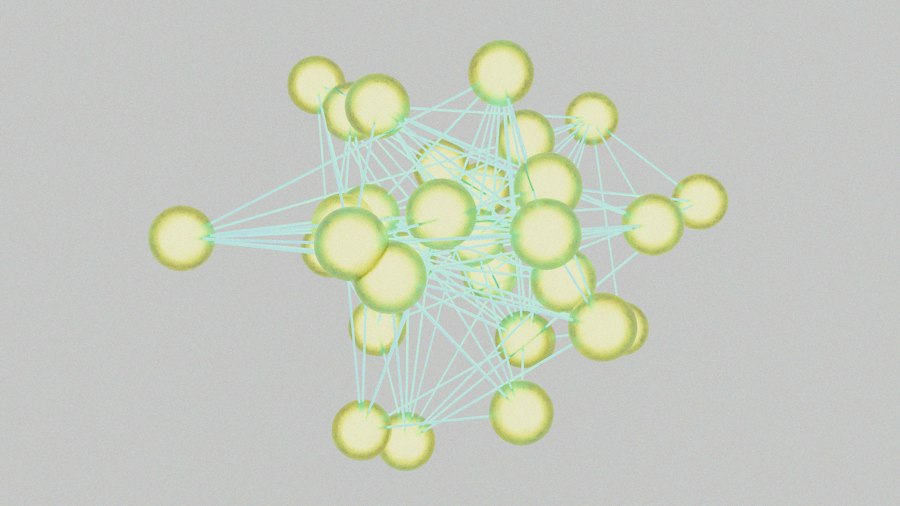
Once job postings are represented as numerical vectors, the AI can get to work grouping them. There are several types of clustering algorithms, each with its strengths and weaknesses. The choice often depends on the nature of the data and the desired outcome.
K-Means Clustering
This is one of the most widely used and easiest-to-understand clustering algorithms. You tell K-Means how many clusters (K) you want. The algorithm then:
- Randomly selects K data points as initial cluster “centroids.”
- Assigns each job posting (data point) to the nearest centroid.
- Recalculates the position of each centroid to be the mean of all data points assigned to that cluster.
- Repeats steps 2 and 3 until the centroids no longer move significantly or a maximum number of iterations is reached.
The ‘distance’ between job postings (vectors) is typically calculated using mathematical metrics like Euclidean distance or cosine similarity. Cosine similarity is particularly useful for text data because it measures the angle between two vectors, indicating how similar their orientations (and thus their content) are, rather than their magnitude.
Pros and Cons of K-Means
Pros: Relatively fast and efficient for large datasets, easy to implement and understand.
Cons: Requires you to specify ‘K’ (the number of clusters) beforehand, which isn’t always known. It can also be sensitive to initial centroid selection and outlier data points.
Hierarchical Clustering
Instead of pre-defining the number of clusters, hierarchical clustering builds a tree-like structure (a dendrogram) of clusters.
Agglomerative (Bottom-Up)
This is the most common type. It starts by treating each job posting as its own cluster. Then, it iteratively merges the two closest clusters until only one large cluster remains (containing all job postings). You can then cut the dendrogram at a certain height to get a desired number of clusters.
Divisive (Top-Down)
This approach starts with all job postings in one cluster and then recursively splits the clusters into smaller ones until each job posting is in its own cluster.
Pros and Cons of Hierarchical Clustering
Pros: Doesn’t require specifying ‘K’ beforehand, provides a visual dendrogram that can help understand the structure of the data, can reveal hierarchical relationships between job roles.
Cons: Can be computationally expensive for very large datasets, once a merge or split is made, it cannot be undone.
DBSCAN (Density-Based Spatial Clustering of Applications with Noise)
DBSCAN is different because it doesn’t assume spherical clusters and can identify arbitrarily shaped clusters. It works by looking for “dense” regions of data points.
- It picks an arbitrary unvisited data point.
- If it has enough neighbors within a specified radius (epsilon, or
eps), it forms a new cluster. - It then recursively adds all directly reachable data points to this cluster.
- Data points that don’t belong to any cluster are labeled as noise (outliers).
Pros and Cons of DBSCAN
Pros: Can find irregularly shaped clusters, robust to outliers, doesn’t require specifying the number of clusters.
Cons: Can be difficult to choose the optimal eps (radius) and min_samples (minimum number of points to form a dense region) parameters, performs poorly with varying densities.
Other Algorithms and Ensembles
More advanced techniques include Gaussian Mixture Models (which assume data points within a cluster are generated from a Gaussian distribution), spectral clustering (which uses the eigenvalues of a similarity matrix), and even self-organizing maps. Often, in real-world scenarios, an ensemble approach might be used, combining the strengths of different algorithms or applying them in stages. For example, a preliminary clustering might be done to reduce the dataset, followed by a more refined algorithm.
Refining and Interpreting the Clusters
Raw clusters from an algorithm aren’t immediately useful. They need to be understood, labeled, and sometimes adjusted by human input. This refinement process is crucial for making the output actionable.
Cluster Validation: Are They Any Good?
How do you know if the clusters are meaningful? This is a key question in clustering.
Intrinsic Metrics
These metrics evaluate the quality of a clustering based solely on the data and the clustering result itself, without external labels.
- Silhouette Score: Measures how similar a data point is to its own cluster compared to other clusters. A higher score (closer to 1) indicates good separation.
- Davies-Bouldin Index: A lower score indicates better clustering, meaning clusters are compact and well-separated.
- Calinski-Harabasz Index: A higher score relates to models with better-defined clusters.
Human Evaluation (The “Smell Test”)
Ultimately, the best test is often human judgment. Do the clusters make sense to a domain expert? If a cluster labeled “Front-End Developer” consistently contains roles requiring React, JavaScript, and CSS, then it’s a good cluster. If it’s a jumble of unrelated roles, then the clustering needs improvement. This human feedback loop is essential, especially in the initial stages of development.
Naming and Describing Clusters
The algorithm spits out “Cluster 1,” “Cluster 2,” etc. That’s not helpful for a user. Human input (or further NLP techniques) is needed to assign meaningful names and descriptions. This often involves:
- Analyzing the most frequent keywords, skills, and job titles within each cluster.
- Identifying common patterns in experience levels or required qualifications.
- A domain expert reviewing a sample of job postings from each cluster to grasp their essence.
For example, a cluster might be automatically identified as “heavy on Python, Machine Learning, Data Science, and SQL.” A human might then label this as “Data Scientist & ML Engineer Roles.”
Handling Outliers and Edge Cases
Not every job posting will fit neatly into a cluster. Some might be outliers – highly specialized roles, incorrectly posted jobs, or jobs with very little descriptive text. Clustering algorithms like DBSCAN can identify these, but even with others, it’s important to have a strategy for handling them. They might be grouped into a “miscellaneous” category or flagged for individual human review.
Dynamic Nature: Adapting to Change
The job market isn’t static. New roles emerge, old ones evolve, and skill requirements shift. A clustering model trained today might become less accurate over time. Therefore, AI job clustering systems need to be dynamic:
- Regular retraining: The models should be periodically retrained on fresh data to capture new trends.
- Incremental learning: Some systems can learn incrementally, adapting to new data without being fully retrained from scratch.
- Monitoring: Continuous monitoring of cluster quality and the emergence of new, unclustered job types is crucial.
Practical Applications and Benefits
| Step | Description | Example Metric | Purpose |
|---|---|---|---|
| 1. Data Collection | Gather job descriptions and related metadata from various sources. | Number of job listings collected: 100,000+ | Build a comprehensive dataset for analysis. |
| 2. Text Preprocessing | Clean and normalize text data by removing stop words, punctuation, and applying stemming. | Stop words removed: 500+ common words | Prepare data for effective feature extraction. |
| 3. Feature Extraction | Convert text into numerical vectors using techniques like TF-IDF or word embeddings. | Vector dimension: 300 (e.g., word2vec embedding size) | Represent job descriptions in a machine-readable format. |
| 4. Dimensionality Reduction | Reduce feature space using PCA or t-SNE to improve clustering performance. | Reduced dimensions: 50 | Enhance computational efficiency and visualization. |
| 5. Clustering Algorithm | Apply clustering methods like K-means or DBSCAN to group similar jobs. | Number of clusters: 20-50 | Identify distinct job categories or clusters. |
| 6. Cluster Evaluation | Assess cluster quality using metrics such as silhouette score or Davies-Bouldin index. | Silhouette score: 0.45 (example) | Validate the meaningfulness of clusters. |
| 7. Interpretation & Labeling | Analyze cluster contents to assign human-readable labels or categories. | Top keywords per cluster: “software”, “engineer”, “developer” | Make clusters understandable for end-users. |
So, why go through all this effort? AI job clustering offers tangible benefits for both job seekers and organizations.
For Job Seekers: Streamlined Discovery
Imagine browsing job boards where roles are intelligently grouped. Instead of endless scrolling or tweaking search terms, a job seeker could:
- Explore broad categories: “Data Science,” “Software Development,” “Marketing,” and then drill down.
- Discover related roles: If they’re interested in a “Cloud Engineer” role, the system might suggest “DevOps Engineer” or “Site Reliability Engineer” as related clusters.
- Understand market demand: By seeing the size and growth of different clusters, job seekers can get a better sense of which skills are in demand.
- Reduce irrelevant results: Less time sifting through postings that don’t match their actual skill set or career aspirations.
For Recruiters and HR Professionals: Enhanced Talent Acquisition
For organizations, the benefits are even more profound:
- Better understanding of the talent landscape: Recruiters can analyze clusters of competitor job postings to understand common skill requirements, desired experience levels, and emerging roles in their industry.
- Optimized job descriptions: By comparing their own job descriptions to successful clusters, companies can refine their language to attract the right candidates, ensuring their postings are discoverable and competitive.
- Efficient candidate matching: When a candidate’s resume (also vectorized and clustered) comes in, it can be quickly matched to existing job clusters, speeding up the initial screening process.
- Identify skill gaps: By clustering internal roles and comparing them to external market clusters, companies can identify where their current workforce might have skill gaps or where new training programs are needed.
- Strategic workforce planning: Understanding the current and future trends in job clusters allows HR to plan for future hiring needs and skill development proactively.
- Reduce time-to-hire: By making the discovery and matching process more efficient, companies can significantly cut down on the time it takes to fill open positions.
Challenges and Ethical Considerations
While powerful, AI job clustering isn’t without its challenges and ethical considerations.
Data Quality is Paramount
The old adage “garbage in, garbage out” applies here more than ever. If the initial job postings are poorly written, contain irrelevant information, or are riddled with errors, the clustering results will suffer. Ensuring high-quality data input is a continuous effort.
Bias in Training Data
AI models learn from the data they’re fed. If the job postings used for training exhibit historical biases (e.g., gendered language, preference for specific demographics, or discriminatory experience requirements), the clustering might inadvertently perpetuate these biases. For instance, if traditionally “male” job titles are clustered separately from “female” ones, even if the underlying skills are identical, the system might reinforce those stereotypes. Mitigating bias requires careful data curation and sometimes specific debiasing techniques.
Interpretability of Clusters
Sometimes, a cluster might form that is mathematically sound but difficult for a human to interpret or label meaningfully. This is often the case with very high-dimensional data. Ensuring that the clusters are “explainable” is important for user adoption and trust.
Privacy Concerns
While job postings are generally public, combining this data with internal candidate data or other proprietary information raises privacy concerns. Ensuring data anonymization and compliance with regulations like GDPR is essential.
The “Black Box” Problem
For some advanced AI models, understanding why certain jobs are clustered together can be challenging. The internal workings of complex neural networks, for example, can be opaque. This “black box” problem can make it difficult to debug issues or explain decisions made by the system.
The Future of Job Clustering
The field is continuously evolving. We can expect:
- More sophisticated NLP: Better language models that understand context, nuance, and even implied skills from less explicit descriptions.
- Multi-modal clustering: Incorporating other data types beyond text, such as company profiles, industry reports, or even public project portfolios, to create richer job representations.
- Personalized clustering: Tailoring cluster views based on individual user preferences, search history, and career goals.
- Predictive analytics: Using job clusters to predict future skill demands, emerging roles, and market shifts, providing even more strategic value to businesses and individuals.
In essence, AI job clustering isn’t about replacing human intuition but augmenting it. It takes the heavy lifting of sifting through massive datasets, identifies patterns, and presents them in an organized, digestible way. This allows both job seekers and recruiters to make more informed decisions, ultimately leading to better matches and a more efficient job market. It’s not magic, just clever application of statistics and computing power.
