
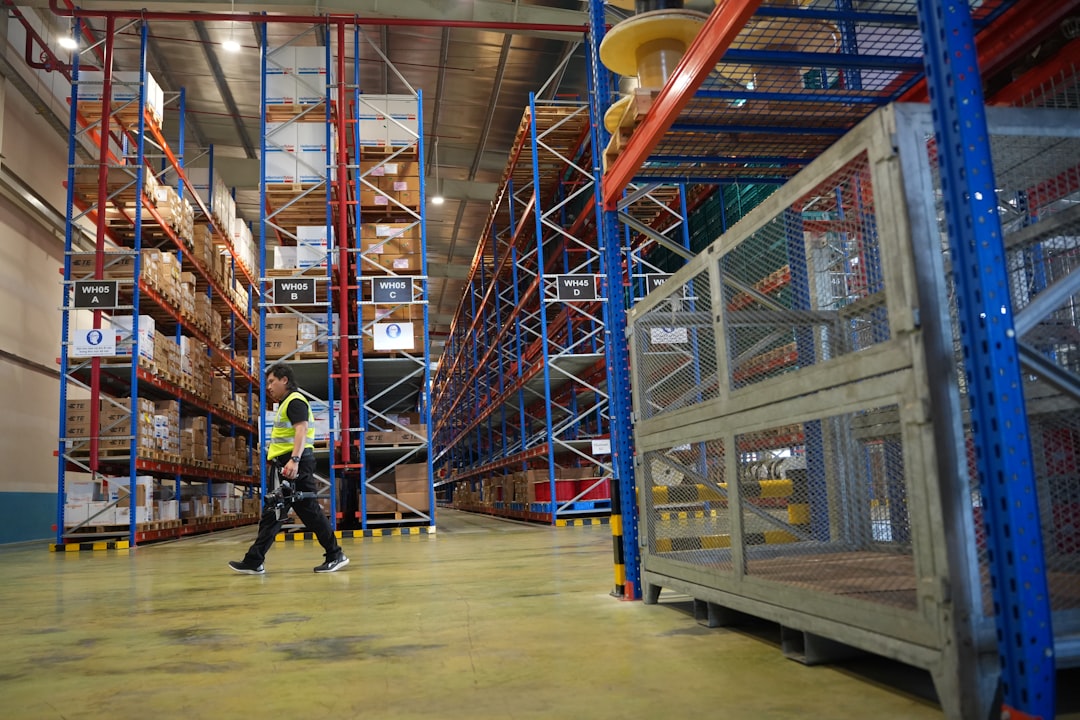

In my experience navigating the intricate world of business operations, one constant truth emerges: the management of inventory is not merely a logistical task; it is the lifeblood of an organization. A well-managed inventory system operates like a finely tuned engine, where every component, from the smallest screw to the largest assembly, is accounted for, functioning optimally, and readily available when needed. Conversely, a chaotic inventory is akin to a jumbled toolbox; valuable items are lost, time is wasted searching, and critical tasks are delayed. Streamlining this vital process through effective management solutions is therefore not a luxury, but a fundamental necessity for sustainable growth and profitability.
I’ve seen firsthand how a lack of foresight can lead to a surplus of unsold goods, tying up valuable capital and storage space—a literal mountain of dormant assets. On the other hand, the chilling reality of stockouts can mean lost sales, frustrated customers, and damaged brand reputation. It’s a delicate balancing act, a high-wire performance where missteps can have significant consequences. This article aims to demystify the art and science of inventory management, providing practical, robust strategies that I have found to be effective in transforming operational inefficiencies into competitive advantages. We will delve into the core principles and emerging technologies that are reshaping how businesses approach their stock, offering tangible solutions to common challenges.
At its heart, effective inventory management is about striking a precise balance. It’s about having enough to meet demand without being overstocked to the point of financial strain or obsolescence. This isn’t a static equilibrium; it’s a dynamic state that requires constant vigilance and adaptation. When I speak of lean inventory, I’m not advocating for empty shelves. Instead, I’m talking about a system that is optimized for efficiency, minimizing waste in its various forms—excessage, obsolescence, and unnecessary holding costs. The benefits of such a system are profound, directly impacting the bottom line and freeing up resources for innovation and strategic growth.
The Illusion of Abundance: Why More Isn’t Always Better
Many businesses operate under the misguided assumption that a vast inventory equates to robust supply capabilities. This can be a dangerous illusion. Think of it as hoarding: while it might provide a sense of security, it often leads to disorganization and hidden costs. Excess inventory represents capital that is not being used to generate revenue. It incurs costs for storage, insurance, and potential obsolescence or spoilage. I recall a situation where a surplus of a particular product line, ordered in anticipation of a boom that never materialized, sat in the warehouse for over a year, depreciating in value and consuming precious space. This excess was a drain, a silent thief of resources.
Minimizing Waste: The Foundation of Efficiency
The concept of waste in inventory management is multifaceted. It includes not only the physical excess of goods but also the time and effort expended in managing them inefficiently. Identifying and eliminating these sources of waste is paramount. This involves a meticulous examination of every touchpoint in the inventory lifecycle, from procurement to dispatch. By adopting a mindset focused on continuous improvement and waste reduction, businesses can achieve significant operational gains. I’ve learned that small, consistent efforts to trim inefficiencies can accumulate into substantial savings over time.
Harnessing the Power of Demand Forecasting
One of the most powerful tools in my arsenal for inventory control is accurate demand forecasting. The ability to predict what customers will want, when they will want it, and in what quantities is the bedrock upon which an optimized inventory system is built. Without this foresight, inventory management becomes reactive, a desperate attempt to catch up to demand rather than proactively meet it. The advancements in data analytics and technology have revolutionized this aspect of inventory management, turning often-opaque predictions into increasingly reliable projections.
Predictive Power: Leveraging Historical Data and Analytics
The foundation of any robust demand forecast lies in historical data. By analyzing past sales, seasonal trends, promotional impacts, and even external economic factors, I can begin to build a picture of future demand. However, relying solely on past performance can be insufficient in today’s volatile market. This is where advanced analytics comes into play. Sophisticated algorithms can identify subtle patterns and correlations that might elude human observation, providing a more nuanced understanding of demand drivers. The insight gained from these analyses allows me to anticipate fluctuations, rather than simply react to them.
Real-Time Insights: Adapting to the Dynamic Market
The world does not stand still, and neither should our inventory strategies. While historical data provides a baseline, real-time insights are crucial for dynamic adjustments. This involves integrating data streams from sales channels, marketing campaigns, and even external event monitoring. For instance, a sudden surge in online interest for a particular product, perhaps spurred by social media buzz, can be detected and translated into an immediate inventory adjustment. This agility prevents stockouts during unexpected demand spikes and avoids overstocking when demand softens more rapidly than anticipated. I consider this ability to “read the room” of the market to be indispensable.
Optimizing Replenishment and Procurement Strategies

Once demand is projected, the next critical step is to ensure that replenishment and procurement are aligned with these forecasts. This is where the rubber meets the road, where theoretical predictions translate into physical stock on hand. My focus here is on creating a seamless flow of goods, minimizing lead times, and fostering strong relationships with suppliers. The goal is to have the right product, in the right quantity, at the right time, without unnecessary delays or excess.
Vendor-Managed Inventory (VMI): A Partnership in Stocking
Vendor-Managed Inventory (VMI) represents a paradigm shift in how businesses procure stock. Instead of my company dictating order quantities, the supplier, armed with shared data and a clear understanding of my needs, takes responsibility for managing inventory levels. This collaborative approach is incredibly effective. It leverages the supplier’s expertise in their specific product lines and reduces the administrative burden on my team. It’s like having a dedicated partner who ensures my shelves are consistently stocked without me needing to micromanage every order. This partnership has proven to boost efficiency and significantly reduce stockouts.
Min/Max Reordering and Economic Order Quantity (EOQ)
To automate and refine the replenishment process, I commonly employ Min/Max reordering and Economic Order Quantity (EOQ) calculations. Min/Max is a straightforward system: a minimum stock level triggers a reorder, and a maximum level sets the upper limit for that order, preventing overstocking. EOQ, on the other hand, is a more sophisticated formula that calculates the optimal order quantity to minimize total inventory costs, including ordering costs and holding costs. By implementing these methodologies, I can automate many reordering prompts, ensuring that stock levels are maintained within a desired range, directly impacting key performance indicators like inventory turnover and carrying costs, which I aim to keep within a target of 15-20%.
Implementing Efficient Warehouse Management Practices

The physical space where inventory resides is as critical as the stock itself. An inefficient warehouse layout or flawed picking processes can lead to significant delays and increased operational costs. My approach to warehouse management is rooted in optimizing flow, minimizing movement, and ensuring that stock is easily accessible and accounted for. This involves a combination of strategic layout design and disciplined operational procedures.
ABC Analysis and Strategic Warehouse Layout
Not all inventory items are created equal. The Pareto principle, or the “80/20 rule,” often applies; a small percentage of inventory items generate a large percentage of sales. This is where ABC analysis comes into play. I categorize my inventory into three tiers: ‘A’ items (high-value, high-velocity), ‘B’ items (medium-value, medium-velocity), and ‘C’ items (low-value, low-velocity). ‘A’ items, being the most crucial, are strategically placed in prime locations within the warehouse, close to packing and shipping areas, to minimize pick times and costs. Mapping these pick routes and utilizing warehouse management systems (WMS) to guide my teams is paramount to cutting down on wasted time and effort.
FIFO, JIT, and Lot Tracking: Preventing Waste and Ensuring Compliance
To combat obsolescence and ensure product freshness, I implement First-In, First-Out (FIFO) or Just-In-Time (JIT) principles. FIFO ensures that the oldest stock is sold first, a critical practice for perishable goods or items with limited shelf life. JIT, on the other hand, aims to receive goods only as they are needed in the production process or for sale, minimizing holding costs. Crucially, both these strategies are enhanced by ERP-enabled lot and serial number tracking. This allows for precise identification of stock, enabling First-Expired-First-Out (FEFO) picking for even greater control over product freshness and to ensure compliance with regulatory requirements.
Embracing Technology for Real-Time Inventory Visibility
| Metric | Description | Typical Value / Range | Importance |
|---|---|---|---|
| Inventory Turnover Ratio | Number of times inventory is sold and replaced over a period | 4 – 12 times per year | High |
| Order Accuracy | Percentage of orders correctly fulfilled without errors | 95% – 99.9% | High |
| Stockout Rate | Frequency of inventory running out of stock | Less than 5% | High |
| Carrying Cost of Inventory | Cost to hold inventory including storage, insurance, and depreciation | 20% – 30% of inventory value annually | Medium |
| Lead Time | Time between placing an order and receiving inventory | 1 day – 4 weeks | Medium |
| Cycle Count Accuracy | Accuracy of periodic inventory counts compared to system records | 98% – 99.5% | High |
| Backorder Rate | Percentage of orders delayed due to insufficient inventory | Less than 2% | High |
| Fill Rate | Percentage of customer demand met without stockouts | 90% – 99% | High |
| Inventory Accuracy | Degree to which recorded inventory matches physical inventory | 95% – 99% | High |
| Return Rate | Percentage of inventory returned due to defects or errors | 1% – 3% | Medium |
In today’s data-driven world, maintaining real-time visibility of inventory is no longer an aspirational goal; it is a fundamental requirement for efficient operations. The advent of cloud-based software and integrated tools has democratized this capability, making advanced inventory management accessible even to small and medium-sized businesses (SMBs). When I have a clear, up-to-the-minute view of my stock, I can make informed decisions rapidly.
Cloud-Based Software: The Central Nervous System of Inventory
Cloud-based inventory management software acts as the central nervous system for my operations. It provides real-time tracking of stock levels across multiple locations, automatically generates low-stock alerts, and allows for mobile access, enabling my teams to update inventory data on the go. This seamless integration with Enterprise Resource Planning (ERP) systems is vital for comprehensive audits, accurate financial reporting, and robust demand forecasting. It transforms what could be a manual, error-prone process into a streamlined, data-rich environment.
AI-Driven Optimization: The Future of Inventory Management
Looking ahead, the impact of Artificial Intelligence (AI) on inventory management is poised to be transformative. By 2026, I anticipate AI playing a pivotal role in analyzing vast datasets—including sales figures, seasonality, and even potential disruptions like weather events or geopolitical instability—to automate replenishments in real-time. Furthermore, AI will excel at optimizing the inventory mix, ensuring that the right balance of products is maintained, and at early detection of slow-moving items, thereby significantly reducing waste and improving decision-making across the board. This predictive and adaptive capability is the next frontier in achieving true inventory excellence.
In conclusion, streamlining inventory management is an ongoing journey, not a destination. It requires a commitment to continuous improvement, a willingness to adopt new technologies, and a deep understanding of the underlying principles. By implementing the strategies discussed – from robust demand forecasting and optimized procurement to efficient warehouse practices and leveraging advanced technology – I am confident that businesses can transform their inventory from a potential liability into a powerful strategic asset, ready to meet the demands of the market with agility and precision.
FAQs
What are inventory management solutions?
Inventory management solutions are software tools or systems designed to help businesses track, manage, and optimize their inventory levels, orders, sales, and deliveries. They aim to improve accuracy, reduce costs, and enhance overall supply chain efficiency.
Why is inventory management important for businesses?
Effective inventory management ensures that a business has the right amount of stock at the right time, preventing overstocking or stockouts. This leads to improved customer satisfaction, reduced holding costs, and better cash flow management.
What features are commonly found in inventory management solutions?
Common features include real-time inventory tracking, barcode scanning, order management, demand forecasting, reporting and analytics, integration with sales platforms, and automated replenishment alerts.
Can inventory management solutions be used by businesses of all sizes?
Yes, inventory management solutions are scalable and can be tailored to meet the needs of small, medium, and large businesses across various industries, from retail and manufacturing to healthcare and logistics.
How do inventory management solutions integrate with other business systems?
Many inventory management solutions offer integration capabilities with accounting software, e-commerce platforms, point-of-sale systems, and supply chain management tools to provide seamless data flow and improve operational efficiency.
