


The silent hum of a retail operation, often overlooked, is the steady pulse of its inventory. This isn’t just about shelves holding products; it’s a complex ecosystem where every item represents capital, a potential sale, and a promise to the customer. For too long, many of us have managed this delicate balance with the equivalent of a sextant and a compass – adequate for navigation in calm seas, but utterly inadequate for navigating the turbulent waters of modern retail. I’ve found that embracing advanced systems has been the most significant upgrade to my own operational navigation, transforming guesswork into calculated precision. If you, like me, are seeking to shore up your inventory, reduce the costly drift of excess stock, and avoid the shipwreck of stockouts, then understanding the capabilities of advanced inventory management systems is not just beneficial; it is paramount.
My journey into optimized inventory began with a stark realization: mountains of data were being generated, but much of it was like scattered pieces of a puzzle, lying dormant in disparate systems. Advanced inventory management systems act as the master key, unlocking the potential of this information and weaving it into a coherent strategy. Think of your current inventory data as a vast, unsorted library. Without a proper cataloging system, finding the right book (or SKU, in our terms) when you need it is a feat of Herculean effort, if not an impossibility. Advanced systems, however, are the meticulous librarians of the digital age, organizing, cross-referencing, and making every piece of information instantly accessible and actionable.
The Foundation: Unified Data Streams
Before any sophisticated algorithms can work their magic, the raw materials must be pure and properly prepared. This means establishing a robust data foundation. In my experience, attempting to build advanced forecasting models on fragmented data is akin to building a skyscraper on sand. It’s destined to crumble. These cutting-edge systems demand a single source of truth, where your Point of Sale (POS) data, your e-commerce platform’s transaction logs, your marketplace sales figures, and even your supply chain information flow together seamlessly.
Master Data Management (MDM): The Rosetta Stone of Your Inventory
One of the initial hurdles I encountered was the inconsistent definition of products and locations across different systems. What one system called “SKU 12345, Blue T-Shirt, Large” another might have listed as “T-SHIRT, L, NAVY.” This inconsistency is a silent killer of efficiency. Master Data Management (MDM) is the crucial first step in overcoming this. It ensures that every product, every location, every supplier, and every customer has a unique, standardized identifier across your entire technological architecture. Without this Rosetta Stone, your advanced systems can’t speak the same language, leading to misinterpretations and faulty decisions. It’s the bedrock upon which all subsequent optimizations are built, ensuring that when the system ‘sees’ a product, it is seeing the same product everywhere.
Integrating Demand and Supply Data: The Two Sides of the Coin
My understanding evolved to recognize that inventory is the physical manifestation of the interplay between demand and supply. Advanced systems excel when they can ingest and analyze unified demand and supply data. This means not just past sales figures, but also current stock levels at each location, incoming shipments, supplier lead times, and even production schedules. Treating these as separate entities is like trying to steer a ship by only looking at the wake; you’re reacting to the past, not anticipating the future. A comprehensive view allows for a more holistic approach, enabling the system to understand the true position of goods relative to their eventual destination.
The Engine Room: AI-Driven Automation and Demand Forecasting
Once the data is unified and clean, the true power of advanced systems begins to manifest. The engine room of any modern inventory optimization strategy is AI-driven automation and intelligent demand forecasting. Gone are the days of relying solely on educated guesses or simple historical averages. AI models are proving to be incredibly adept at dissecting complex patterns that human analysts might miss, or quite frankly, would take an impractically long time to uncover.
Predictive Forecasting: Beyond Simple Averages
I remember managing inventory with spreadsheets that relied on simple moving averages. While it was a starting point, it was like trying to predict the weather by looking at yesterday’s temperature. AI and machine learning models have revolutionized this. They analyze a vast array of factors: historical sales, seasonality, current promotions, competitor activities, economic indicators, and even weather patterns if relevant. This allows for a far more nuanced and accurate prediction of future demand. The improvement in inventory turnover I’ve witnessed, reaching up to 30% at maturity for some businesses [2], is a testament to this predictive power. It’s about moving from seeing the past to anticipating the future, allowing for proactive adjustments rather than reactive firefighting.
Probabilistic Forecasting: Embracing Uncertainty
However, the future is rarely a single, definitive point. Demand is inherently uncertain. Advanced systems now employ probabilistic forecasting. Instead of giving you a single predicted sales number, they provide a range of possibilities with associated probabilities. This is like a meteorologist not just saying it will rain, but saying there’s a 70% chance of rain between 2 PM and 5 PM. This probabilistic approach acknowledges the inherent variability in demand and seasonality, leading to more robust safety stock calculations and a better understanding of potential risks. It shifts the focus from absolute prediction to intelligent risk management.
From Macro to Micro: Real-Time SKU-Level Decisioning
One of the most impactful shifts I’ve experienced is the move from broad-stroke inventory decisions to hyper-granular, real-time SKU-level decisioning. Historically, inventory strategies were often applied regionally or even nationally. This is like deciding to wear a coat in a region based on its average temperature, without considering that one city might be experiencing a heatwave while another is under a blizzard. Inefficiencies are most pronounced at the individual store and SKU level, and it’s here that advanced systems exert their greatest influence.
Granular Control: The Power of Specificity
These systems allow me to see the precise demand for a specific product, say, a particular size and color of a shoe, at a particular store, at this very moment. This granular insight is critical. It means I can trigger a reorder for that exact SKU at that specific location if demand is surging, or adjust replenishment based on its unique sales velocity. It cuts through the noise of aggregate data and addresses inefficiencies at their source. This is where the real savings are found – not in optimizing the broad strokes, but in perfecting the fine details of every single item’s journey.
Dynamic Replenishment: Responding to the Now
This real-time, SKU-level visibility directly fuels dynamic replenishment. Reorder points and safety stock levels are no longer static figures set once a quarter. Instead, AI models continuously adjust these parameters based on real-time demand fluctuations, changes in supplier lead times, and updated service level targets. This eliminates the costly practice of holding excessive safety stock “just in case,” without increasing the risk of stockouts. It’s like a ship’s captain constantly adjusting the sails based on the prevailing wind, rather than setting them once for a presumed average breeze. This responsiveness ensures that I am not holding onto capital tied up in unnecessary inventory, nor am I leaving potential sales on the table due to insufficient stock.
The Unifying Force: Omnichannel Centralization
The modern retail landscape is no longer a single, linear path; it’s a complex web of interconnected channels. Customers can browse online, buy in-store, return via mail, and expect a consistent experience throughout. For inventory management, this shift presents a significant challenge if systems remain siloed. Omnichannel centralization is therefore not just a trend, but a fundamental requirement for survival. It’s about seeing your entire business as one cohesive entity, rather than a collection of separate arms.
Breaking Down the Silos: A Single Pane of Glass
My previous experience often involved juggling multiple dashboards and reports to understand my inventory across different channels. This was an inefficient and error-prone process. Advanced systems are consolidating inventory management into single, unified platforms. This means that my POS system, my e-commerce website, and my marketplaces are all feeding into one central intelligence hub in real-time. This eliminates those frustrating data silos, providing me with a clear, unified view of stock availability across all locations and sales channels. This real-time visibility is critical for fulfilling customer orders from the optimal location, be it a store, a distribution center, or even another store’s overstock.
Seamless Stock Visibility: The Customer’s Expectation
Customers no longer care about which channel they interacted with; they expect to see products available wherever and whenever they choose to shop. Omnichannel centralization ensures that if an item is in stock in a physical store, that information is accurately reflected on my website, and vice versa. This seamless stock visibility prevents missed sales opportunities and enhances the customer experience. It’s about ensuring that the promise made online can be fulfilled, and that the stock sitting on a shelf isn’t invisible to an online shopper. This convergence of stock information is the bedrock of delivering a truly integrated customer journey.
Inventory Allocation Optimization: From Channel to Customer
With a unified view, I can then optimize inventory allocation across channels. This means strategically positioning stock to meet anticipated demand, whether that’s fulfilling online orders from a physical store to reduce shipping times and costs, or ensuring adequate stock for in-store pick-up options. This intelligent allocation ensures that my inventory is working as hard as possible, serving customers efficiently regardless of their chosen path to purchase. It’s about using the collective intelligence of my entire inventory network to serve the individual customer.
The Architecture of Agility: API-First and Composable Platforms
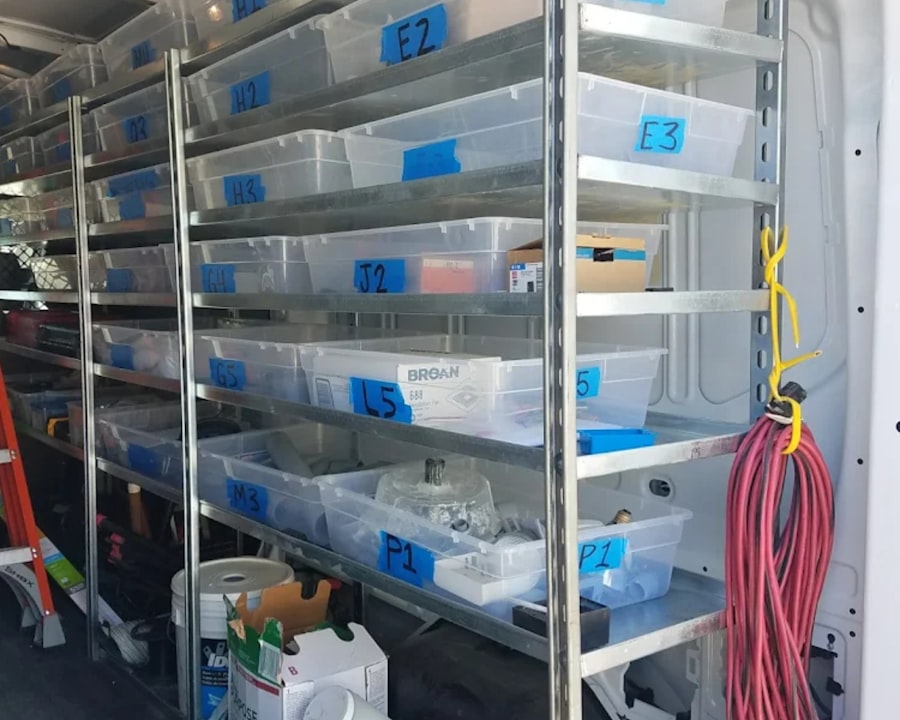
The technology landscape is constantly evolving, and the requirement for systems to adapt and integrate is non-negotiable. This is where the principles of API-first and composable platforms become incredibly important in modern inventory management. Trying to force a monolithic, rigid system to adapt to new workflows or emerging technologies is like trying to change the tires on a moving train. It’s inefficient and often impossible.
Flexibility in Design: Building with Blocks
My understanding of technological infrastructure has shifted from thinking about large, entrenched systems to understanding the power of modularity. API-first platforms are designed with integration in mind from the ground up. This means they expose their functionality through Application Programming Interfaces (APIs), allowing them to communicate seamlessly with other systems. This is crucial because, in retail, we often need to integrate with specialized vendor systems, unique promotional engines, or emerging customer engagement tools.
Composable Inventory Management: Tailoring the Solution
Furthermore, the trend towards composable platforms means that inventory management is no longer a one-size-fits-all solution. Instead, businesses can select and assemble various components – or “services” – to build a system that precisely fits their unique workflows and requirements. This could involve plugging in a specialized demand forecasting module, a sophisticated WMS (Warehouse Management System) integration, or a dynamic pricing engine, all while ensuring they work harmoniously with the core inventory management functionality. It’s like having a toolbox of building blocks that allows me to construct precisely the inventory management solution I need, rather than being forced to accept a pre-fabricated structure that is only partially suitable.
Automating Workflows: The Invisible Hand of Efficiency
This composable, API-first approach also greatly facilitates automated reordering and cross-channel inventory updates. When systems can talk to each other seamlessly, the manual processes for reordering can be automated based on real-time stock levels and forecasted demand. Similarly, updates to inventory levels on one channel can instantaneously propagate to all other connected channels. This eliminates lag times, reduces errors, and ensures that my inventory information is always current and accurate, preventing the frustrating experience of selling an item that is, in reality, no longer available. It’s the invisible hand of efficiency, constantly working to keep things aligned and moving smoothly.
The Continuous Refinement: Implementing and Evolving Advanced Systems

Adopting advanced inventory management systems is not a “set it and forget it” endeavor. It’s a continuous journey of refinement and adaptation. Just as a skilled navigator constantly checks their instruments and adjusts their course, I’ve learned that ongoing monitoring and adaptation are key to maximizing the benefits of these powerful tools.
Iterative Improvement: The Evolution of Optimization
The initial implementation of an advanced system is only the beginning. The true value lies in the ongoing process of iterative improvement. This involves regularly reviewing the performance of the AI models, analyzing the accuracy of the demand forecasts, and assessing the impact on key inventory metrics like turnover, stockout rates, and carrying costs. It’s a feedback loop where the system’s performance informs adjustments, leading to increasingly precise optimizations over time.
Performance Monitoring: Keeping a Finger on the Pulse
Consistent performance monitoring is non-negotiable. I regularly track key performance indicators (KPIs) such as forecast accuracy (e.g., Mean Absolute Percentage Error – MAPE), inventory turnover ratio, fill rates, and the number of stockouts or overstocks. These metrics act as my compass, indicating whether the system is performing as expected and where potential areas for adjustment exist. This proactive approach allows me to identify and address issues before they become significant problems.
Adapting to Change: The Unpredictable Nature of Retail
The retail environment is dynamic. New product lines are introduced, consumer preferences shift, and unexpected external events can impact demand. Advanced systems must be agile enough to adapt to these changes. This might involve retraining AI models with new data, adjusting parameters for seasonality that deviates from historical norms, or recalibrating safety stock levels in response to new supplier lead-time data. The ability to adapt is what separates systems that merely manage inventory from those that truly optimize it. It’s about ensuring that my inventory strategy remains relevant and effective, even as the retail landscape itself transforms.
The quest for optimized inventory is a never-ending one, but with the advent of advanced systems, it has transformed from a daunting challenge into a navigable journey. By anchoring my operations in a unified data foundation, leveraging the predictive power of AI, embracing real-time SKU-level decisioning, and building with agile, composable architectures, I have found a more efficient, less wasteful, and ultimately, more profitable way to manage the lifeblood of my retail business. This isn’t just about technology; it’s about a fundamental shift in how I approach the intricate dance of supply and demand, ensuring that every item in my care is positioned to meet its intended purpose with maximum efficacy.
FAQs
What is a retail inventory system?
A retail inventory system is a software or method used by retailers to track and manage the quantity, location, and status of products in their inventory. It helps ensure that stock levels are optimized to meet customer demand without overstocking or stockouts.
How does a retail inventory system benefit businesses?
A retail inventory system improves accuracy in stock management, reduces manual errors, enhances order fulfillment speed, provides real-time inventory data, and helps in making informed purchasing decisions. This leads to increased efficiency and customer satisfaction.
What types of retail inventory systems are commonly used?
Common types include manual inventory systems, barcode-based systems, RFID (Radio Frequency Identification) systems, and cloud-based inventory management software. Each type varies in complexity and automation level.
Can a retail inventory system integrate with other business tools?
Yes, many retail inventory systems can integrate with point-of-sale (POS) systems, accounting software, e-commerce platforms, and supply chain management tools to streamline operations and provide comprehensive business insights.
What features should I look for in a retail inventory system?
Key features include real-time inventory tracking, automated reorder alerts, sales reporting, multi-location management, barcode scanning support, and user-friendly interfaces. Scalability and integration capabilities are also important considerations.
